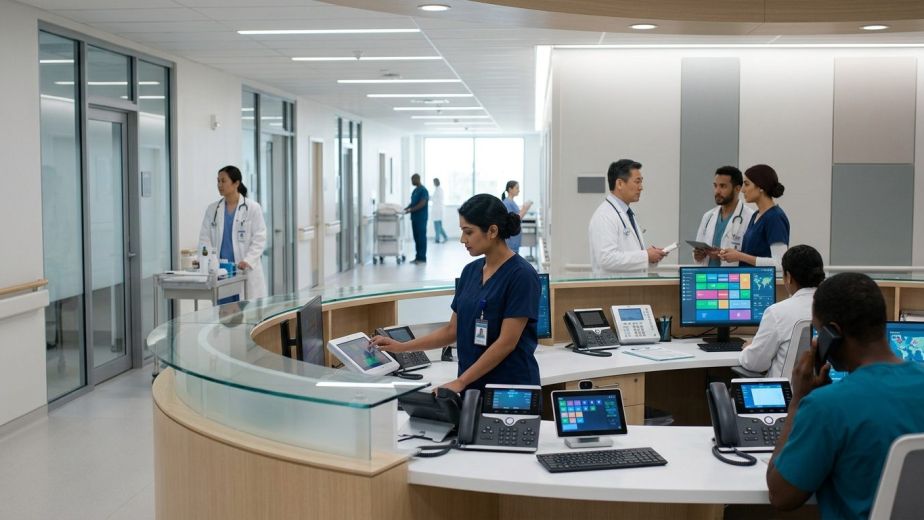
Modern enterprises rely on cloud telephony solutions to power daily collaboration, customer operations, and distributed workforces. However, shifting real-time communications to the cloud introduces architectural risks if voice continuity is treated as an afterthought. This enterprise guide explores how to design, secure, and deploy resilient voice platforms that maintain seamless operations even during upstream network failures.
Key takeaways
- True enterprise cloud voice requires decoupled Session Border Controllers (SBCs) and multi-carrier SIP trunk routing rather than single-vendor lock-in.
- Local survivability appliances protect physical sites and customer hotlines from wide-area internet and public cloud disruptions.
- Quality of Service (QoS) engineering and SD-WAN transport policies prevent call jitter, latency spikes, and audio degradation.
- A phased migration model mitigates operational disruption through parallel SIP testing, clean extension mapping, and structured number porting.
What Modern Cloud Telephony Solutions Actually Look Like
Many organisations mistake hosted VoIP for mere web softphones tied to a single software-as-a-service provider. In reality, mature telephony solutions operate as layered, distributed systems. The core PBX engine handles call control, directory services, and routing policies. Platforms such as 3CX and Yeastar can run in private data centres, dedicated virtual servers, or hyperscale public clouds. Separating the PBX engine from physical transport guarantees administrative autonomy and cost efficiency.
Sitting at the edge of this architecture are Session Border Controllers. SBCs act as specialised voice firewalls. They normalise SIP signalling across disparate networks, enforce packet security, prevent toll fraud, and transcode audio codecs. When linked to carrier networks through multi-tenant SIP trunking, enterprise cloud telephony decouples your internal dial plans from physical lines. This allows flexible provisioning of geographic and toll-free numbers across multiple office locations.
Finally, resilient systems deploy hybrid local survivability gateways on-premises. While user softphones and desk handsets register with the cloud PBX during normal conditions, these local appliances monitor session keepalives. If access to the primary cloud instance degrades, the local gateway steps in immediately to route internal calls and direct emergency traffic via local breakout circuits.
Architecting for Resilience: Lessons from Upstream Cloud Outages
Centralised cloud platforms are not immune to disruption. In mid-November 2026, CBC reported that Microsoft services were fully restored after a global outage, highlighting the systemic vulnerability of single-stack operational models. Concurrently, Simply Wall St noted that retail investors were closely monitoring cloud infrastructure stocks following these outage risks. For enterprise voice leaders, these incidents underscore a vital principle: relying entirely on one public cloud platform for business-critical communications invites unacceptable operational exposure.
Building a robust cloud telephony architecture requires active redundancy at every transit layer. Dual-carrier SIP routing ensures that if an upstream telecommunications provider suffers a fibre cut or core routing fault, outbound calls divert automatically across an alternate carrier. Furthermore, automated DNS SRV records provide dynamic endpoint failover. Handsets continuously resolve multiple PBX hosts weighted by priority, rerouting active registrations in seconds without manual intervention.
In critical public and commercial environments, continuity is paramount. For example, cedarnews.net reported on Police Scotland’s move to modern cloud communications, demonstrating the rigorous uptime and security requirements demanded by public safety organisations. Designing for high availability means combining cloud PBX orchestration with on-site survivable branch appliances. If an upstream cloud service degrades, branch handsets maintain station-to-station dialling, intercom capabilities, and local call handling without interruption.
Core Feature Matrix: Evaluating Enterprise Cloud Telephony Platforms
Selecting the right business cloud telephony platform requires balancing operational workflows against administrative overhead. Mid-market and enterprise buyers must evaluate vendors using clear architectural criteria rather than generic feature lists.
| Capability | Operational Requirement | Enterprise Value |
|---|---|---|
| Dynamic IVR & Queuing | Skills-based routing, queue callback, and CRM database lookups. | Reduces caller abandonment and directs customers to qualified specialists. |
| UCaaS Integration | Unified voice, video conferencing, live chat, and presence status. | Eliminates disjointed communication tools across remote teams. |
| Platform Integration | Direct Routing for Microsoft Teams, Yeastar, or 3CX interoperability. | Preserves native user interfaces while maintaining cost-effective carrier routing. |
| Reporting & Analytics | Real-time SLA dashboards, agent wallboards, and call recording retention. | Provides visibility into customer contact performance and compliance. |
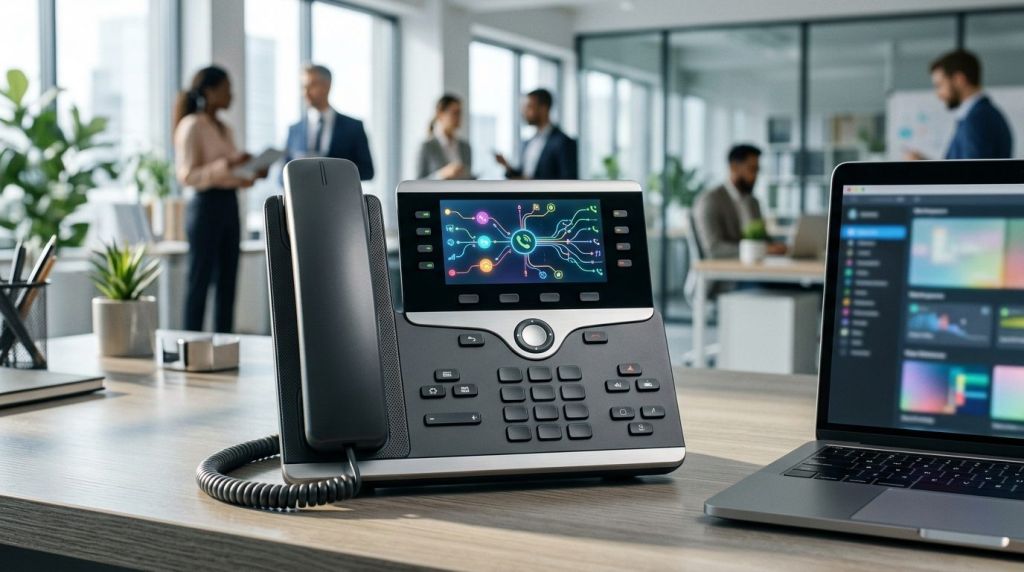
To support hybrid operational environments, evaluate how effortlessly the system handles hardware endpoints. Deploying certified IP phones from vendors such as Yealink and Fanvil guarantees reliable physical handsets for reception desks, executive suites, and shared workspaces. Integrating unified communication tools alongside ruggedised endpoints allows enterprises to support both knowledge workers and frontline operational staff effectively.
Network Prerequisites and Quality of Service (QoS) Engineering
Voice packets are extremely sensitive to underlying network conditions. Unlike standard web traffic, real-time voice cannot rely on TCP retransmission when packets drop. Flawless enterprise cloud telephony demands strict adherence to performance metrics: one-way latency below 150 milliseconds, jitter under 30 milliseconds, and packet loss under 1 percent.
Achieving these standards across enterprise local and wide area networks requires proactive Quality of Service (QoS) engineering. Network administrators must configure Layer 3 Differentiated Services Code Point (DSCP) policies, tagging real-time audio streams with Expedited Forwarding (EF 46). Signalling traffic should be assigned CS3 or AF31. At Layer 2, Class of Service (CoS 5) tagging prioritises voice frames across switches and VLANs, shielding RTP audio from bursts of bulk file transfers or backup routines.
For organisations connecting multiple branch offices, managed SD-WAN provides essential intelligence. SD-WAN appliances measure jitter, packet loss, and latency across diverse WAN links in real time. If a primary broadband connection degrades, the SD-WAN layer dynamically shifts active voice sessions to secondary fibre or LTE links without dropping live calls. For complete design guidelines, consult our detailed resource on multi-site VoIP architecture.
Step-by-Step Migration: Transitioning from Legacy PBX to Cloud Telephony
A successful cloud telephony migration demands meticulous planning to avoid dropped customer inquiries or internal confusion. Organisations must adopt a structured, phased methodology to decommission legacy ISDN or copper-based systems safely.
- Infrastructure and Bandwidth Audit: Inspect core switching infrastructure, Power over Ethernet (PoE) budgets, and router QoS capabilities. Verify that local internet service providers support clean SIP trunk signalling without intrusive SIP ALG manipulation.
- Extension and Routing Mapping: Document existing dial plans, hunt groups, digital receptionists, and call pickup permissions. Use this opportunity to streamline outdated call flows and retire unassigned direct inward dialling (DID) numbers.
- Parallel SIP Trunk Testing: Establish new cloud PBX instances and configure parallel SIP trunks. Conduct rigorous penetration and audio quality tests using temporary numbers before moving any operational departments.
- Pilot Department Rollout: Deploy the system to a tech-savvy internal team, such as IT support or marketing. Gather feedback on desk phone provisioning, mobile softphone behaviour, and call quality across various internet connections.
- Carrier Porting Coordination and Cutover: Coordinate porting dates with existing telecom carriers well in advance. Schedule the final legacy PBX cutover during off-peak hours, validating inbound routing across all published contact numbers immediately upon completion.
For a complete deployment roadmap, review our comprehensive enterprise VoIP migration checklist to ensure every operational dependency is accounted for before decommissioning legacy hardware.
Total Cost of Ownership (TCO) and Sizing Your Telephony Investment
Evaluating the financial return of cloud telephony failover and hosted systems requires looking beyond surface-level user licensing. Legacy on-premises PBXs incur heavy capital expenditure, proprietary hardware upgrades, expensive maintenance contracts, and dedicated line rental fees. In contrast, cloud platforms convert these unpredictable expenses into managed, operational outlays.
However, enterprise buyers should scrutinise billing models carefully. Some SaaS providers charge rigid monthly fees per extension, which quickly inflates costs for organisations with large deskless workforces. Alternatively, platforms such as 3CX base licensing on concurrent call volume rather than total named users. For businesses operating shift work, retail counters, or distributed branch networks, concurrent licensing significantly lowers overall recurring expenditure.
Hardware life-cycle management represents another key variable. Procuring standards-based SIP handsets from manufacturers like Yealink or Fanvil protects capital investments. Because these devices adhere to open RFC standards, they can be reprovisioned across different PBX platforms if business requirements change, avoiding proprietary hardware lock-in.
Achieving Voice Resilience with Call Experts
Deploying resilient cloud telephony solutions protects your organisation from unexpected network disruptions while modernising enterprise collaboration. By combining open-platform PBX engines, robust SBC security, intelligent SD-WAN routing, and disciplined migration planning, IT leaders can eliminate legacy vulnerabilities and achieve true operational continuity.
At Call Experts, we help enterprises design, deploy, and manage dependable communications infrastructure tailored precisely to their workflows. Whether you need to modernise multi-site call handling or audit your network for cloud readiness, our engineering specialists provide the architecture and operational support your business requires. Speak with our voice team through our contact page to explore the right telephony strategy for your organisation.
Frequently asked questions
What is the difference between hosted VoIP and modern cloud telephony solutions?
Hosted VoIP often refers to basic off-site voice calling over the internet. Modern cloud telephony solutions provide complete enterprise communications architecture, integrating PBX call control, Session Border Controllers, multi-carrier failover, unified messaging, dynamic IVRs, and business application integration within a resilient cloud framework.
How does cloud telephony maintain continuity during an internet outage?
Resilient architectures use automated DNS failover, dual-carrier SIP routing, and mobile softphone apps on cellular networks. Additionally, deploying on-premises survivable branch appliances ensures local office handsets continue station-to-station dialling and emergency routing even if wide area internet connectivity drops.
Can we retain our existing office desk phones when migrating to the cloud?
Yes, provided your existing hardware supports standard open SIP protocols. Modern enterprise handsets from manufacturers like Yealink and Fanvil can be reprovisioned to cloud platforms seamlessly, preserving your initial hardware investment while modernising backend PBX functionality.
How much bandwidth does an enterprise cloud telephony system require?
Voice calls using standard G.711 uncompressed codecs require roughly 85 to 100 kbps per concurrent call, including network packet overhead. Compressed codecs like G.729 or Opus reduce this to 30 to 40 kbps, though ensuring low jitter and latency is far more vital than raw bandwidth.
Sources
- Inside Police Scotland’s move to modern cloud communications — cedarnews.net, 2026-11-16
- Microsoft services fully restored after global outage — CBC, 2026-11-14
- 3 Cloud Stocks Retail Investors Are Watching After Microsoft Outage Risk — Simply Wall St, 2026-11-14