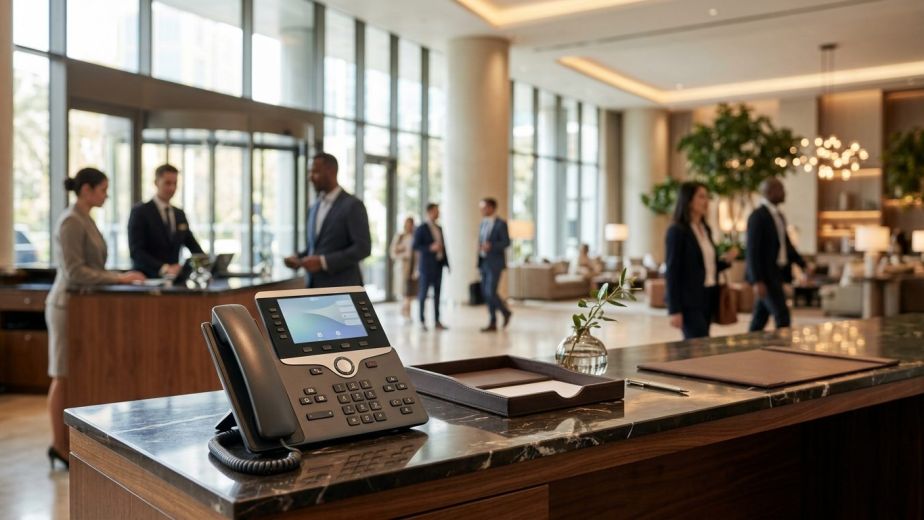
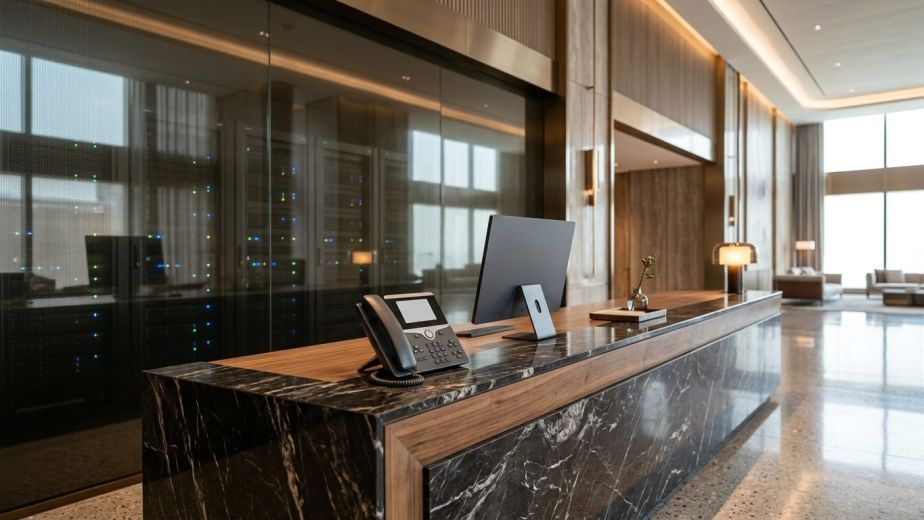
A legacy pbx room hotel footprint often consumes dozens of square metres of prime back-of-house real estate while running power-hungry hardware that strains operational budgets. Modern hospitality operations require streamlined, resilient communications that integrate directly with property management workflows without demanding an entire dedicated facility. This engineering guide explains how hotel operators can transition from sprawling equipment racks to high-efficiency, virtualised pbx room hotel telephony solutions while protecting guest safety and operational continuity.
Key takeaways
- Physical hotel telecommunications rooms can be condensed into compact micro-racks or migrated to cloud platforms to reclaim valuable space.
- High-density FXS media gateways bridge legacy 2-wire guestroom copper to modern SIP systems, avoiding costly recabling.
- Middleware standards such as FIAS and HTNG maintain reliable links between your PBX and Property Management System (PMS).
- Precise room-level emergency dispatch notifications remain non-negotiable for hospitality compliance and life safety.
The Evolution of the Hotel PBX Room
Decades ago, the telephone nerve centre of any property was the switchboard room, filled with manual cord boards and operators routing every internal and external call. As solid-state Private Branch Exchange systems matured, this space became the dedicated hospitality telecom room, housing walls of Main Distribution Frames (MDF), cross-connect punch blocks, and massive analog line cards. For decades, the pbx room hotel installation was the undisputed anchor of daily guest service, handling wake-up requests, room service orders, and manager dispatches.
However, guest communication behaviours have shifted dramatically. While in-room mobile usage has reduced guest-to-outside toll call volumes, the in-room telephone remains an indispensable lifeline for emergency handling, concierge requests, housekeeping updates, and front-desk coordination. Traditional Time-Division Multiplexing (TDM) switchboards are now obsolete, with replacement components difficult to source and maintenance contracts growing increasingly expensive. Modern properties are systematically replacing these hardware monoliths with IP-based architectures that run in compact server environments or off-premise cloud infrastructure.
Core Hardware Housed in a Hospitality Telecom Room
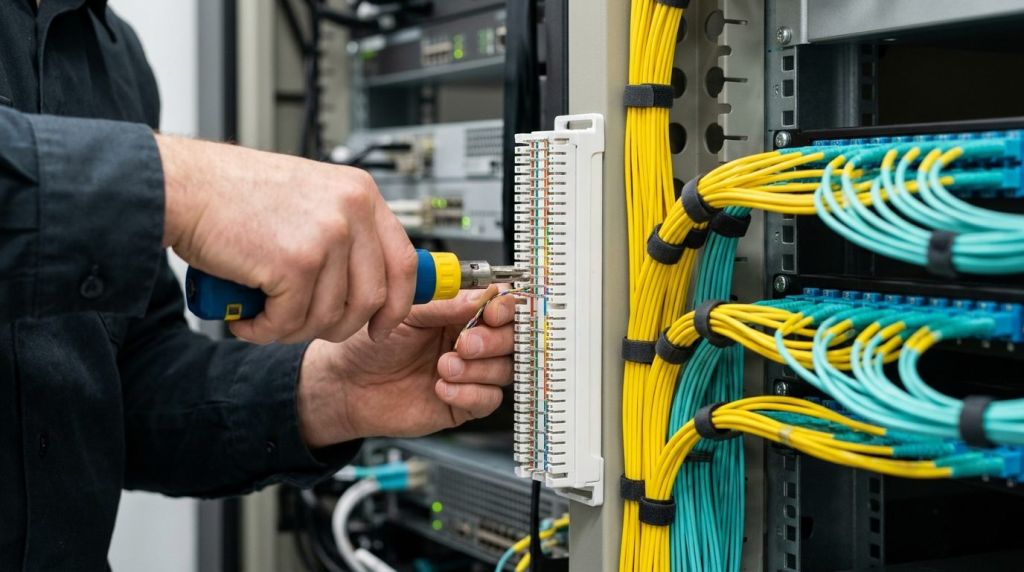
Understanding what lives inside a traditional communications closet helps engineering teams plan an efficient downsizing project. In a typical legacy deployment, the room contains several interdependent hardware layers that ensure continuous dial-tone availability across the entire building:
- Main Distribution Frame (MDF) and Intermediate Frames (IDF): Large 66-block or 110-block punch panels terminating hundreds, or even thousands, of unshielded twisted-pair (UTP) copper runs originating from guest suites, administration offices, and elevator cabs.
- Analog/FXS Line Cabinets: Heavy chassis holding analog extension cards that supply line voltage, ring cadence, and dial tone to guest handsets.
- Trunk Termination Equipment: Legacy Primary Rate Interface (PRI) cards, channel banks, or basic rate circuits delivering public exchange connectivity.
- Ancillary Application Servers: Physical servers dedicated exclusively to hotel call accounting, automated wake-up engines, and centralised voicemail storage.
- Power and Environmental Systems: Large uninterruptible power supply (UPS) batteries, backup generator switchgear, and dedicated split-system air conditioning units running continuous cooling cycles.
When evaluating a hospitality cloud PBX vs on-premise hotel system, this infrastructure represents the bulk of both capital and operational expenditure. Condensing these hardware stacks reduces maintenance failure points and drastically simplifies back-of-house infrastructure management.
PMS Integration: Connecting Telephony to Front-Desk Operations
A hotel telephone system cannot operate in isolation; it must maintain constant, two-way communication with the central Property Management System (PMS). In a conventional pbx room hotel environment, this link is maintained via legacy RS-232 serial connections or local IP sockets communicating through industry-standard middleware protocols such as Oracle Hospitality OPERA FIAS (Fidelio Interface Application Specification) or HTNG (Hospitality Technology Next Generation) open standards.
This deep pms pbx integration automates vital hospitality switchboard operations without requiring manual intervention from front-desk receptionists. When a guest checks in, the PMS prompts the PBX to open the room extension for external dialling and dynamically sets the guest’s surname on the digital display for concierge routing. Similarly, during checkout, the PBX instantly restricts the line to internal calling only, flushes the extension’s voicemail box, clears personal wake-up schedules, and posts final minibar or telephone toll charges back to the guest folio.
Housekeeping teams rely equally on this bridge. Attendants enter feature access codes directly into the guest room telephone keypad (for example, entering *21 to indicate a room has been inspected and cleaned), which immediately updates room inventory statuses across the property management screen. Preserving this real-time PMS dialogue is essential when upgrading any legacy switchboard to an IP platform.
Safety, Compliance, and Life-Safety Dispatch
Beyond guest service, the most critical function managed within the pbx room hotel envelope is emergency communications. Hotel operators face strict international statutory requirements regarding emergency dispatch. Regulatory frameworks such as Kari’s Law and RAY BAUM’s Act in the United States, alongside equivalent life-safety standards across Europe and other jurisdictions, mandate two core capabilities for multi-line telephone systems:
- Direct Emergency Dialling: Handsets must allow guests and employees to dial emergency numbers immediately without requiring an outside-line prefix (such as dialling 9 or 0 first).
- Dispatchable Location Delivery: Outbound emergency calls must convey specific, floor-and-room location data directly to the public safety answering point, rather than displaying a generic hotel trunk billing number.
Furthermore, the internal PBX configuration must trigger immediate, automated alert broadcasts to on-duty staff. When an emergency call is initiated from any room, the PBX should immediately bridge front-desk operators, security control rooms, and general management via simultaneous screen pop-ups, SMS alerts, or auto-dial audio bridges. This ensures property teams can direct first responders straight to the exact room without delay.
The Real Overhead of Maintaining On-Premise PBX Rooms
Maintaining a dedicated physical telecom room imposes significant hidden expenses that cut directly into property margins. The total cost of ownership extends far beyond initial hardware depreciation:
| Operational Expense Factor | Legacy On-Premise PBX Room | Modernised Micro-Rack / Virtual PBX |
|---|---|---|
| Floor Space Allocation | 10 to 30 m² of dedicated, secured back-of-house room space. | Zero dedicated room required; fits into a standard shared 4U rack space. |
| HVAC Power Consumption | 24/7 dedicated precision cooling units drawing continuous commercial power. | Negligible thermal output; cooled within general network equipment enclosures. |
| Maintenance Contracts | Costly single-vendor legacy support agreements with scarce replacement parts. | Standard software assurance agreements and readily available commercial hardware. |
| Physical Site Risks | High vulnerability to localized pipe bursts, overhead drainage leaks, or fire. | Resilient cloud hosting or off-site colocation with automatic failover routes. |
Many hotel general managers find that decommissioning a bulky switchboard closet allows them to convert that floor space into productive revenue centres, such as luggage storage facilities, server colocation, or expanded staff offices. For multi-site hotel brands, eliminating duplicate physical telephony rooms across several properties delivers substantial operational savings.
Virtualising the PBX Room: Hybrid and Cloud Telephony Architecture
Hospitality leaders are often reluctant to modernise their hotel pbx system because they assume an IP migration requires replacing every copper wire across hundreds of guest suites. Running Category 6 structured cabling to every bedside table in an active 400-room property can cause severe room downtime and cost hundreds of thousands of pounds.
A pragmatic engineering design eliminates this obstacle. Modern guest room telephony architecture adopts a hybrid model. The core intelligence—call routing, automated attendants, PMS middleware, and billing integrations—is deployed on virtual servers or fully hosted platforms such as 3CX business communications or Yeastar business communications. Meanwhile, high-density FXS VoIP gateways (such as equipment from Grandstream or Dinstar) are installed in the existing distribution racks.
These high-density gateways terminate the original 2-wire analog copper pairs on standard RJ21 Telco connectors, converting analog signals directly into IP packets. Guest rooms retain their familiar, robust analog handsets, while administrative offices, reception desks, and concierge stations upgrade to feature-rich IP endpoints or softphone clients. This hybrid approach enables properties to virtualise their PBX platform without disturbing a single square inch of guest room plasterwork.
Furthermore, organizations running modern guest networks often introduce software automation tools to maintain phone system health alongside their server infrastructure. Incorporating platform configuration tools like Puppet infrastructure automation allows engineering teams to deploy consistent operating configurations across hybrid PBX environments effortlessly.
Step-by-Step Modernisation Checklist for Hotel IT Leaders
Upgrading a live property switchboard requires structured execution to prevent guest disruption. Seasoned engineering teams follow this phased transition framework when decommissioning an aging pbx room hotel installation:
- Inventory and Cable Audit: Document every physical extension, including back-of-house workstations, elevator emergency phones, swimming pool emergency poles, and guest suites. Verify the integrity of the IDF punch-down blocks.
- PMS Interface Scoping: Confirm the property management system software version and identify supported communication drivers. Ensure the proposed IP-PBX includes native or certified middleware bridges for your PMS environment.
- SIP Trunk Redundancy Provisioning: Replace rigid legacy PRI circuits with dual, carrier-diverse SIP trunks routed across redundant internet connections or SD-WAN circuits to guarantee continuous external dial-tone availability.
- Gateway Sizing and Deployment: Calculate required FXS port capacities, build out the rack hardware, and map analog copper extensions to virtual IP extensions systematically.
- Life-Safety Notification Testing: Validate direct-dial emergency routing from guest room extensions, ensuring the front-office switchboard receives audible and visual alerts instantly when test numbers are triggered.
- Cutover and Legacy Decommissioning: Execute a late-night cutover during low call-volume windows. Once verified, isolate, label, and safely dismantle the legacy PBX cabinets, punch blocks, and redundant cooling units.
Executing a switchboard modernisation project requires balancing guest hospitality expectations with rigorous technical engineering. Working with certified telecommunications partners ensures your property eliminates legacy operational vulnerabilities while maintaining uninterrupted guest communications and staff coordination.
Transforming Hospitality Communications
Modernising your hotel communications room does not require complex rewiring or operational downtime. By transitioning from outdated analog cabinets to efficient virtual architectures and managed SIP infrastructure, hospitality operators dramatically cut utility overhead, reclaim valuable commercial square footage, and enhance guest service workflows. Call Experts designs, installs, and supports resilient hospitality communications architectures engineered around property management integration, uninterrupted life-safety routing, and long-term reliability. To assess your property infrastructure and discuss a modernisation roadmap, reach out to our engineering team through our contact page.
Frequently asked questions
Can a hotel keep its existing guest room phones when modernising the PBX room?
Yes. By deploying high-density FXS media gateways in the telecom closet, properties can convert existing analog 2-wire copper lines into SIP channels. This allows hotels to keep their existing guest room telephones while virtualising the core PBX infrastructure.
What happens to hotel switchboard operations if the internet goes down?
Resilient hotel architectures deploy local gateway survivability, dual-carrier SIP trunking, or managed SD-WAN links. Even if primary internet connectivity drops, internal room-to-room dialling, concierge routing, and local emergency call functions continue operating seamlessly on the property's local area network.
How does a modernised PBX integrate with our Property Management System (PMS)?
Modern hospitality telephone platforms communicate with property management systems using certified middleware protocols like Oracle FIAS or HTNG. These interfaces automate guest check-in extension provisioning, caller ID matching, room status housekeeping codes, and real-time call billing updates.
How much space can a hotel reclaim by modernising its telecom room?
Legacy PBX systems typically occupy an entire dedicated room of 10 to 30 square metres to house equipment cabinets, punch frames, and cooling units. A modernised IP or cloud setup condenses this equipment into a standard 4U to 8U rack footprint, freeing up space for commercial or back-of-house storage use.