Implementing robust enterprise workflow orchestration bridges the gap between fragmented line-of-business applications and core operational goals. Without structured orchestration, mid-market businesses frequently find themselves burdened by brittle scripts and disjointed software integrations. This technical guide outlines how engineering teams can design, decouple, and govern end-to-end automation pipelines that ensure operational continuity.
Key takeaways
- True orchestration manages distributed system state, whereas basic task automation merely triggers isolated actions.
- Decoupling legacy databases via message brokers prevents service degradation and mitigates technical debt.
- Embedding artificial intelligence requires strict separation between probabilistic models and deterministic business logic.
- Resilience patterns such as idempotency keys, dead-letter queues, and circuit breakers protect against cascading systemic outages.
The Automation Paradox: Task Automation vs Enterprise Workflow Orchestration
Many organisations begin their modernisation journey by implementing basic point-to-point automation. A department might connect an intake form directly to a customer relationship management (CRM) database using simple webhook triggers. While this delivers immediate convenience, it inevitably causes automation sprawl. When business logic lives across dozens of disconnected SaaS triggers, tracking failures becomes impossible.
This fragmented approach exposes organisations to severe operational vulnerabilities. As reported by Federal News Network, when legacy software meant to deliver modern capabilities lacks architectural decoupling, it frequently becomes an operational trap that multiplies technical debt. Point-to-point automations bind modern cloud tools to fragile legacy systems without validation, rate buffering, or state management.
True enterprise workflow orchestration operates differently. Rather than executing ephemeral tasks, an orchestration layer coordinates long-running, multi-step business transactions across distributed infrastructure. It maintains transactional context, handles multi-day pauses for human intervention, and ensures that failures in a single subsystem do not corrupt dependent business processes. Organisations seeking sustainable efficiency must transition toward comprehensive enterprise workflow automation that unifies disparate workloads under structured oversight.
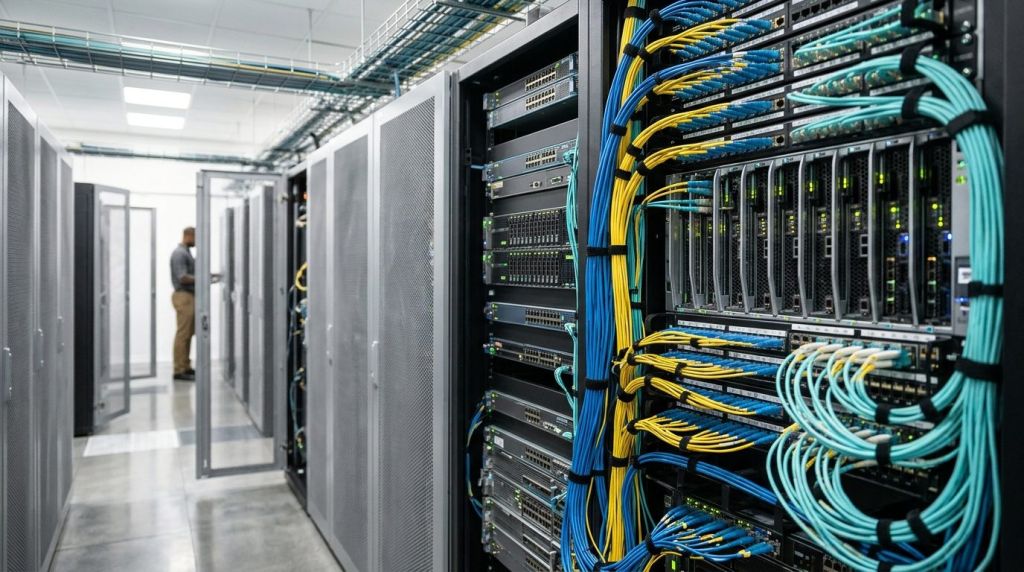
Architectural Blueprint: The Four Layers of Automated Workflow Architecture
A resilient enterprise workflow orchestration platform does not merely string together disparate webhooks. Instead, it relies on a four-tier automated workflow architecture engineered to withstand API deprecations, downstream latency, and network blips.
The first tier is the ingestion and trigger layer. This boundary handles inbound traffic via signed webhooks, scheduled polling workers, and event streams. It validates payload structures immediately, discarding malformed data before internal execution begins.
The second tier is the state engine. Enterprise processes often take days or weeks to conclude—such as onboarding a corporate healthcare client or processing commercial property acquisitions. The state engine records every step to a persistent datastore. If a host system reboots mid-execution, the engine reads the persisted state and resumes seamlessly without re-running completed actions.
The third tier is the integration connector plane. This plane abstracts interactions with enterprise resource planning (ERP) platforms, cloud environments, and internal databases. By isolating external API definitions from core business logic, engineers can update endpoint versions without rewriting the underlying workflow.
The fourth tier is the telemetry and observability plane. It monitors execution duration, queue depths, and error rates in real time. End-to-end distributed tracing ensures that support engineers can pinpoint precisely where an execution stalled across distributed cloud microservices.
Decoupling Systems to Avoid the Legacy Software Automation Trap
Legacy core applications present a massive challenge for scaling organisations. Decades-old relational databases, on-premises ERPs, and bespoke desktop utilities rarely possess the connection pooling or API quotas required for high-throughput automation. Firing hundreds of concurrent requests directly at an on-premises database will inevitably lead to database lockups and downtime.
When engineered correctly, enterprise workflow orchestration isolates delicate backends from volatile request spikes. Integration engineers achieve this decoupling by placing distributed message brokers—such as Apache Kafka, RabbitMQ, or enterprise service buses—between modern cloud events and legacy applications. These brokers queue incoming payloads, allowing legacy connectors to consume work at a controlled, sustainable rate.
Furthermore, teams should manage these integration boundaries using infrastructure as code frameworks. Managing connector provisioning alongside configurations through tools like Puppet infrastructure automation ensures that pipeline dependencies remain reproducible and auditable across hybrid environments. Decoupling protects legacy investments while granting modern business units the freedom to automate at cloud speed.
Human-in-the-Loop Governance, Audit Trails, and Security Controls
Automating mission-critical processes introduces substantial governance requirements. Without strict boundaries, enterprise workflow orchestration can inadvertently propagate malicious actions across enterprise boundaries. As ARNnet reported, artificial intelligence and cyber security have converged into an urgent business continuity problem when automation runs unchecked without rigorous security policies.
To mitigate this exposure, platforms must enforce granular role-based access control (RBAC). Workflows interacting with sensitive customer databases, payment gateways, or enterprise directories should adhere strictly to the principle of least privilege. Integration service accounts must possess only the specific scopes required for their tasks, verified continuously via secure identity providers.
High-impact transactions require deterministic human-in-the-loop approval gates. For example, while an automated pipeline can ingest, validate, and reconcile vendor invoices, releasing disbursements above a designated threshold must pause the workflow and dispatch an interactive approval ticket to an authorised financial controller. All state transitions, manual approvals, and system mutations must be written to immutable, tamper-evident audit logs to satisfy compliance mandates such as ISO 27001 or regional data protection standards.
Embedding Practical AI Workflow Orchestration into Deterministic Workflows
Mid-market organisations are rapidly incorporating generative models and intelligent document processors into core operations. As WhaTech reported when examining firms helping businesses automate complex workflows, the demand for multi-step agentic integration is surging across enterprise sectors. However, unstructured artificial intelligence introduces unpredictability.
Modern enterprise workflow orchestration architectures leverage machine learning models for classification, entity extraction, and data synthesis, but they never permit probabilistic models to dictate mission-critical business rules directly. Engineers must decouple the probabilistic AI layer from the deterministic execution engine.
Consider an automated medical records intake pipeline. A computer vision model extracts patient details from scanned records and returns both the structured data and a statistical confidence score. The deterministic orchestration engine evaluates this score against strict business criteria:
- High Confidence (>95%): The payload moves automatically to core database ingestion.
- Marginal Confidence (80%–95%): The system routes the record to an internal verification queue for manual human inspection.
- Low Confidence (<80%): The workflow flags the document as unreadable, halts execution, and alerts the intake administrator.
By enforcing deterministic boundary logic, organisations harness the efficiency of cognitive automation without suffering from data hallucinations or compliance violations.
Failure Modes and Resilience: Idempotency, DLQs, and Circuit Breakers
In distributed computing, external systems will inevitably degrade, time out, or drop connections. An enterprise workflow platform must be architected for graceful degradation rather than catastrophic failure.
| Resilience Pattern | Operational Role | Key Business Outcome |
|---|---|---|
| Idempotency Keys | Assigns a unique cryptographic token to each transaction payload. | Prevents duplicate operations (such as charging a customer twice) during network retries. |
| Dead-Letter Queues (DLQs) | Isolates unprocessable or repeatedly failing messages to a side queue. | Prevents a single poisoned payload from halting the entire processing pipeline. |
| Exponential Backoff | Progressively increases the delay between automated retry attempts. | Avoids flooding recovering target APIs with simultaneous connection bursts. |
| Circuit Breakers | Automatically trips and diverts traffic when downstream failure rates exceed thresholds. | Protects internal infrastructure from cascading resource exhaustion during third-party outages. |
Implementing idempotency is non-negotiable for enterprise workflows. When an integration connector sends an HTTP POST request to a billing API and the connection drops before receiving an acknowledgement, the engine cannot know if the charge succeeded. With idempotency keys, the engine retries the request safely; the payment gateway recognises the token and returns the existing result rather than processing a duplicate charge.
Likewise, circuit breaker patterns protect against systemic resource exhaustion. If a partner API begins returning 503 errors, the circuit trips from Closed to Open. Instead of exhausting internal thread pools waiting for timeouts, the orchestrator immediately diverts subsequent transactions to secondary paths or stores them in durable queues until an external health probe confirms service restoration.
Building the Enterprise Automation Roadmap: In-House vs Managed Delivery
Modernising operational pipelines requires a clear transition strategy. IT leaders should begin by categorising processes across an impact-complexity matrix. Routine, high-volume tasks with structured inputs—such as employee onboarding or data synchronisation between cloud platforms—deliver rapid returns and establish internal confidence.
Organisations must also evaluate their operational capacity. Building and maintaining resilient state machines, dedicated brokers, and private API gateways internally demands significant software engineering and security overhead. For growing enterprises, partnering with a specialised provider accelerates time to value while mitigating delivery risks.
Call Experts designs and deploys secure, high-availability infrastructure environments that integrate enterprise telephony, cloud systems, and automated workflows. Whether modernising workloads on Microsoft Azure or establishing multi-layered security using Fortinet cybersecurity gateways, establishing an enterprise-grade integration foundation is essential.
Selecting an experienced technology partner to guide enterprise workflow orchestration ensures that integration pipelines remain scalable, compliant, and deeply resilient against external disruptions. To assess your organisation’s current integration architecture and evaluate tailored automation strategies, visit our contact page to discuss your requirements with an infrastructure specialist.
Frequently asked questions
What is the primary difference between RPA and enterprise workflow orchestration?
Robotic Process Automation typically automates repetitive, UI-level tasks on a single desktop or application. In contrast, enterprise workflow orchestration coordinates long-running, multi-system business processes across distributed APIs, cloud databases, and human approval gates, maintaining state and transactional integrity throughout.
How do message brokers prevent legacy software failures in automation?
Message brokers act as a protective shock absorber between high-speed cloud triggers and legacy backends. By queuing incoming transactions, brokers allow older databases and on-premises software to process requests sequentially at an engineered rate, preventing system lockups and server crashes.
Why is idempotency essential for automated enterprise workflows?
Idempotency ensures that executing the exact same request multiple times produces the identical outcome without unintended side effects. If a network drops during an automated financial transaction, an idempotent retry guarantees that the customer is not billed twice.
How should businesses manage AI hallucinations in automated processes?
Organisations must decouple probabilistic AI outputs from deterministic execution logic. Systems should evaluate confidence scores against strict thresholds, routing low-confidence or high-impact decisions to human-in-the-loop review queues before committing changes to core databases.
Sources
- AI and cyber security are a business continuity problem — ARNnet, 2026-11-20
- When the legacy software meant to deliver AI becomes a trap — Federal News Network, 2026-11-20
- 15 AI Agent Development Companies Helping UK Businesses Automate Complex Workflows — WhaTech, 2026-11-19