Using a comprehensive managed sd-wan service checklist ensures that your organisation evaluates network providers on operational capability rather than superficial sales promises. As wide area networks modernise, enterprise connectivity requires seamless integration across cloud workloads, multi-branch operations, and dynamic broadband links. Sourcing sd wan as a managed service must solve architectural complexity, guarantee application performance, and provide genuine accountability during unexpected outages.
Key takeaways
- Appliance leasing is not network management; true Network-as-a-Service includes proactive NOC monitoring, lifecycle updates, and carrier management.
- Underlay ISP management determines real-world uptime because software overlays cannot fix severed physical cables or unmanaged transit routing.
- Modern deployments must integrate Secure Access Service Edge (SASE) capabilities and cloud points of presence to protect remote and branch traffic.
- Contractual service level agreements (SLAs) must enforce Mean Time to Repair (MTTR) with tangible financial credits rather than soft response targets.
Defining SD-WAN as a Managed Service: True NaaS vs Appliance Leasing
Many legacy telecommunications providers market basic hardware financing as a fully managed service. In this scenario, the customer simply rents edge routers on a multi-year term. The internal IT department still handles configuration changes, firmware vulnerability patches, routing adjustments, and circuit troubleshooting. When evaluating managed SD-WAN vs MPLS, true Network-as-a-Service (NaaS) delivers full-lifecycle operational governance rather than an equipment loan.
A legitimate managed service bundles hardware maintenance, software licensing, orchestration, security posture management, and round-the-clock Network Operations Centre (NOC) oversight into a unified subscription. The service provider assumes end-to-end accountability for performance, routing policies, and device lifecycles. When assembling a managed sd-wan service checklist, IT leaders must distinguish between simple vendor financing and full operational delegation.
The standard established by bodies like the MEF clarifies that managed SD-WAN includes application-aware routing, centralised policy orchestration, and automated tunnel creation across diverse physical media. If your internal team must independently troubleshoot IPSec tunnels or update firewall firmware over weekends, you have purchased an appliance lease, not a managed service.
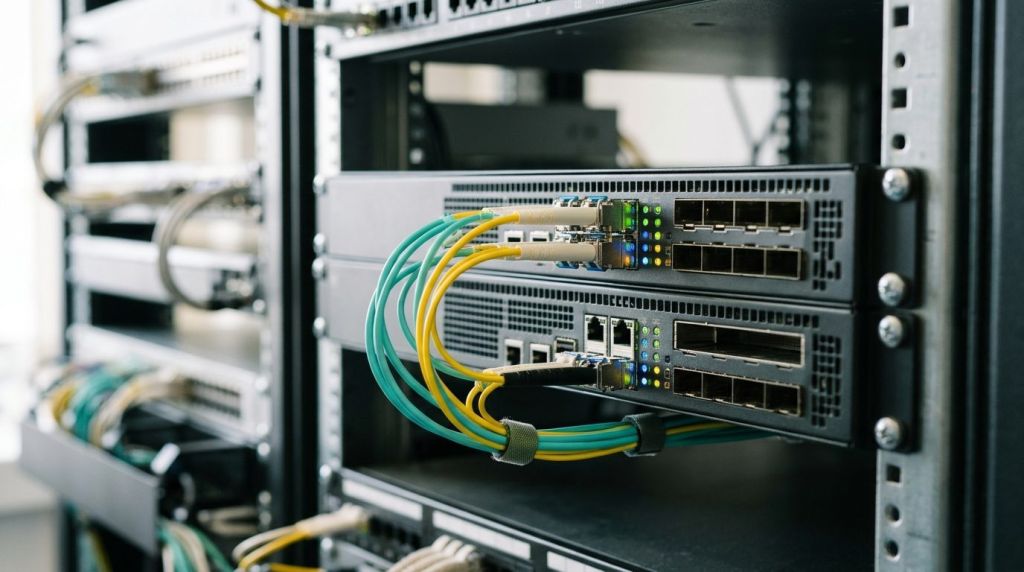
SD-WAN Underlay vs Overlay Management: The Core Operational Divide
The most common operational pitfall in software-defined networking involves the line between the virtual overlay and the physical underlay. The overlay consists of encrypted tunnels, dynamic path selection algorithms, and application prioritization rules. The underlay represents the physical reality: terrestrial optical fibre, commercial broadband, fixed wireless, and satellite circuits from independent Internet Service Providers (ISPs).
Providers offering superficial management routinely disclaim responsibility for underlay faults. When a branch loses connectivity due to a severed subsea cable or degraded metropolitan fibre, these vendors simply notify your IT team that the edge device is unreachable. This leaves your staff holding the bag, navigating overseas carrier helpdesks, opening fault tickets, and chasing escalation trees.
Rigorous sd-wan underlay vs overlay management requires your provider to aggregate and govern every physical connection. Under this model, the managed service provider directly holds carrier escalation agreements, monitors packet loss at the transport layer, and manages carrier trouble tickets through to resolution. Vetting this operational capability is a foundational element of any thorough managed sd-wan service checklist.
Key underlay management capabilities to demand include:
- Single-ticket accountability where the managed provider coordinates directly with third-party ISPs during brownouts or complete link drops.
- Dynamic carrier routing reviews to address chronic peering congestion between international exchange points.
- Automated multi-WAN failover testing to verify that secondary 4G, 5G, or fibre links actively carry priority traffic when primary links degrade.
- Consolidated billing and billing dispute resolution across diverse local and regional telecom carriers.
The SASE Convergence Audit: Evaluating Cloud PoPs and Edge Security
SD-WAN cannot exist in isolation from enterprise cybersecurity. Distributed branch networks and hybrid workforces demand that routing decisions incorporate contextual identity, zero-trust policies, and threat prevention. Consuming Fortinet cybersecurity solutions alongside managed network fabrics allows organisations to inspect traffic without backhauling remote packets to a central corporate data centre.
Modern network architectures rely increasingly on cloud-native security backbones. As reported by The Fast Mode, Check Point scaled its SASE platform with 48 additional Azure points of presence, highlighting how security providers leverage hyperscaler global networks to expand proximity and reduce transport latency for distributed users. When reviewing managed sase and sd-wan proposals, IT leaders must audit where traffic inspection occurs and how many hops exist between the branch edge and essential business applications.
Security convergence within your managed sd-wan service checklist must address the following technical domains:
- Unified Edge Policies: Ensure the provider coordinates zero-touch firewall policies, intrusion prevention (IPS), and web filtering directly from the SD-WAN controller.
- Secure SaaS Breakout: Validate that trusted cloud traffic (such as enterprise communications and productivity platforms) routes locally via direct internet breakouts, while untrusted web browsing redirects through security inspection points.
- Zero Trust Network Access (ZTNA): Confirm whether the edge appliances natively enforce identity-based access controls for remote endpoints accessing branch-hosted applications.
SD-WAN Managed Service SLA and Operational Metrics
A contractual sd-wan managed service sla must establish enforceable performance standards across both software systems and operational staff. Vague promises of “five-nines reliability” often collapse under legal scrutiny because they describe hardware availability rather than end-to-end data transmission.
Your contract must define distinct thresholds for Mean Time to Respond versus Mean Time to Repair (MTTR). A response SLA merely means a support engineer has acknowledged your email; MTTR binds the provider to diagnose, isolate, and restore degraded communications within fixed hours. Crucially, your agreement must include genuine financial service credits calculated against the total monthly billing when performance criteria fail.
| Metric Category | Superficial Management Threshold | Enterprise-Grade Managed Service SLA |
|---|---|---|
| Incident Response | Within 1–2 hours via automated portal confirmation | Under 15 minutes with named L2/L3 network engineer escalation |
| Hardware Replacement MTTR | Next business day dispatch (customer installs) | 4-hour on-site courier with field engineer installation |
| Latency & Jitter Guarantees | Unmonitored; deemed an “ISP underlay condition” | Proactive path steering if jitter exceeds 30ms or latency breaches 150ms |
| Packet Loss Threshold | Reported monthly in historical PDF exports | Dynamic failover when loss exceeds 0.5%; automatic ticketing at 1% |
| Underlay Fault Resolution | Excluded; client must contact carrier directly | Full carrier escalation handled by NOC with 30-minute status cadence |
Dynamic link steering must operate proactively. If an underlying broadband line experiences severe packet loss, your SD-WAN edge should re-route critical voice and database traffic across alternate circuits in sub-second intervals without dropping active connections. This level of automated protection is why an effective managed sd-wan service checklist demands clear demarcation points and strict operational guarantees.
Co-Management Governance: Visibility, RBAC, and Policy SLAs
Outsourcing network operations does not require forfeiting architectural control. The most effective enterprise operating model involves co-management, where the managed service provider handles infrastructure health, carrier tickets, and monitoring, while internal engineering teams maintain self-service policy visibility. Reviewing co-managed SD-WAN models demonstrates how shared operational authority reduces administrative friction.
Co-management frameworks require robust Role-Based Access Control (RBAC). Your internal team needs read-access to real-time telemetry, bandwidth consumption charts, and active route tables, accompanied by change-request approval workflows. When internal network engineers need to update a Quality of Service (QoS) rule or whitelist a new cloud application, the provider must deliver on tight policy change SLAs.
Standard policy changes must adhere to predefined turn-around windows: standard changes (such as adjusting traffic shaping queues) within four hours, and emergency changes (such as isolating an internal subnet during a suspected security incident) within thirty minutes. Incorporating administrative governance into your network as a service evaluation ensures internal agility is not compromised by bureaucratic ticketing backlogs.
The Complete Managed SD-WAN Service Checklist for Deployment
Before executing multi-year agreements or scheduling branch cutovers, operations directors should execute this structured vetting assessment across prospective providers.
- Hardware Redundancy & Power Failure: Does the edge appliance feature physical bypass ports to ensure traffic flows unhindered even if the unit loses internal power?
- Zero-Touch Edge Provisioning: Can branch hardware deploy simply by connecting local Ethernet cables, pulling pre-validated configurations securely from the central orchestrator?
- Multi-Cloud Direct Peering: Does the provider offer pre-built virtual gateways and automated interconnects directly into Microsoft Azure and private data centres?
- Granular Application Telemetry: Does the administrative dashboard report real-time packet loss, round-trip time, and Mean Opinion Score (MOS) metrics for unified communications?
- Carrier Neutrality & ISP Independence: Can the provider deliver multi-vendor transport paths, mixing local optical fibre, commercial copper, and redundant wireless links at every branch?
- Documented Cutover & Rollback Protocols: Does the deployment contract define automated rollback triggers if post-cutover packet degradation exceeds established limits?
Adhering to this practical managed sd-wan service checklist shields your operations from the operational disconnects that frequently emerge post-migration.
Selecting the Right Managed Network Partner
Migrating enterprise wide area networks should eliminate business disruptions, improve user application experience, and free your engineering staff from carrier trouble ticketing. Success depends on selecting a technical partner that takes responsibility for both the physical network underlay and advanced software orchestration. Applying this rigorous managed sd-wan service checklist protects your enterprise from costly downtime and ensures your wide area network scales alongside modern business demands.
To design, deploy, and support an agile, resilient enterprise network architecture tailored to your operational workflows, contact the network specialists at Call Experts today.
Frequently asked questions
What is the difference between fully managed and co-managed SD-WAN?
Fully managed SD-WAN delegates all administrative tasks, including routing policies, hardware lifecycle, and ISP escalation, to the service provider. Co-managed SD-WAN allows internal IT teams to retain administrative visibility and self-service control over application routing and firewall policies, while the managed partner monitors underlying infrastructure and manages carrier tickets.
Why is underlay management critical in an SD-WAN managed service contract?
SD-WAN software overlays can dynamically route around degraded circuits, but they cannot restore severed physical cables or unmanaged transit routing. If your provider does not manage the physical underlay, your internal IT team must spend hours chasing third-party internet service providers to resolve circuit dropouts and line faults.
How does SD-WAN dynamic path selection improve enterprise voice quality?
Dynamic path selection constantly measures latency, jitter, and packet loss across all available internet and private connections. If a primary circuit suffers a performance brownout, the SD-WAN appliance seamlessly steers active voice packets across secondary connections without dropping in-progress telephone calls.
What financial protections should be included in an SD-WAN SLA?
An enterprise SLA must include tiered financial service credits deducted from your monthly recurring charges if the provider breaches availability, response, or MTTR thresholds. Avoid contracts that offer only service extensions or soft apologies instead of enforceable billing deductions.
Sources
- Check Point Scales SASE Platform with 48 Additional Azure Points of Presence — The Fast Mode, 2026-11-19