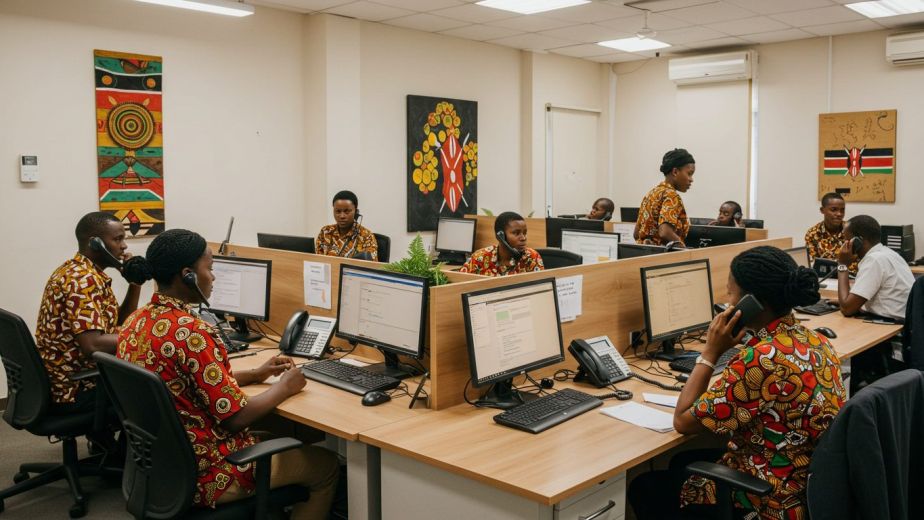
Deploying an airtel sip trunk provides modern enterprises with reliable, direct connectivity to tier-1 telecom infrastructure without the physical constraints of legacy PRI circuits. As organisations retire ageing copper and ISDN connections, establishing robust Session Initiation Protocol (SIP) signalling ensures predictable voice delivery, lower operational expenses, and dynamic scaling across regional offices. This guide outlines the engineering specifications, PBX parameters, and architectural resilience required to achieve uninterrupted corporate voice operations.
Key takeaways
- Delivery typically relies on IP authentication over dedicated data circuits or secure public interconnects using port 5060.
- Successful integration across platforms such as 3CX and Yeastar demands strict adherence to E.164 number formatting and G.711a codec prioritisation.
- Boundary protection using Session Border Controllers or next-generation firewalls is vital to prevent toll fraud, registration scans, and topology leaks.
- High availability requires automated outbound route sequencing and multi-carrier failover design to maintain business continuity.
Understanding Airtel SIP Trunk Architecture: Delivery and Protocols
From an infrastructure perspective, an airtel sip trunk replaces physical trunks with virtual voice paths running over IP infrastructure. Telecom providers typically deliver the service through two primary mechanisms: dedicated last-mile data circuits (such as MPLS or point-to-point fibre) or over managed public internet connections using Software-Defined WAN (SD-WAN). For mission-critical corporate voice environments, dedicated circuits remain the gold standard because they isolate voice packets from public transit, guaranteeing throughput and jitter controls.
Authentication models also dictate your edge configuration. While residential VoIP often uses username and password registrations, enterprise SIP trunking predominantly uses IP-to-IP peering. Under this model, the carrier binds your trunk directly to your organisation’s static public IP address or a dedicated private interconnect address provided on their customer premises equipment (CPE). Any traffic arriving at the carrier gateway from an unauthorised IP is dropped immediately.
Signalling occurs over standard SIP ports, using User Datagram Protocol (UDP) or Transmission Control Protocol (TCP) port 5060, adhering to IETF standards for session management. Once signalling handshakes establish the session, the actual voice payload travels across Real-time Transport Protocol (RTP) media streams using dynamic high-range UDP ports (typically 10000 to 20000 or 9000 to 10999, depending on PBX specifications).
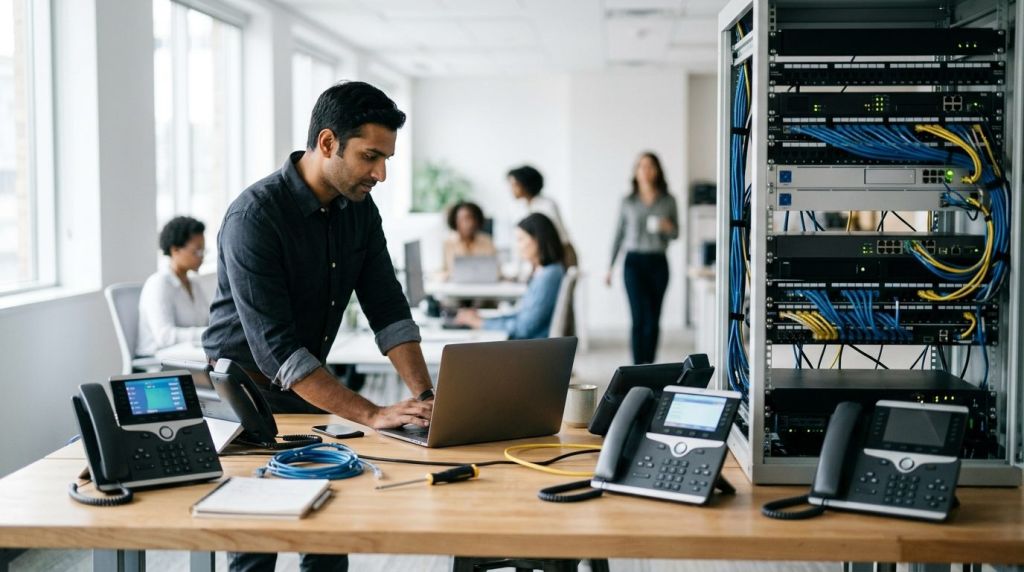
Network Readiness Checklist and Bandwidth Planning
Turning up an airtel sip trunk without rigorous transport qualification frequently leads to call quality degradation, one-way audio, and intermittent signalling drops. Before scheduling your carrier cutover, engineering teams should validate enterprise routing and local switching against the following deployment criteria.
- Static IP Allocation: Confirm whether the trunk operates via a carrier-assigned private point-to-point subnet or a public static IP address configured on your edge router.
- Voice VLAN Segmentation: Isolate all enterprise VoIP endpoints, media gateways, and IP-PBX interfaces onto dedicated voice VLANs with 802.1p Layer 2 Class of Service (CoS) marking.
- Differentiated Services Code Point (DSCP): Apply Layer 3 QoS policies, marking SIP signalling packets as DSCP CS3 (precedence 3) and RTP media streams as Expedited Forwarding (DSCP EF / 46).
- Bandwidth Sizing: Calculate your concurrent call capacity using approximately 100 kbps per call when using uncompressed G.711a (A-law) codecs. An enterprise running 30 concurrent call paths requires at least 3 Mbps of dedicated, symmetrical throughput reserved solely for voice traffic.
- Jitter and Latency Thresholds: Verify that one-way network latency remains below 150 milliseconds, packet jitter stays under 30 milliseconds, and packet loss measures below 1% under peak line utilisation.
Enterprises modernising distributed branch infrastructure often pair trunk turn-ups with upgraded airtel sip trunk termination architectures to ensure pristine audio across multi-site campuses.
Configuring an Airtel SIP Trunk on 3CX and Yeastar
Modern IP-PBX platforms streamline carrier connectivity, but precise field mapping is essential to ensure outbound calls complete and incoming Direct Inward Dialling (DID) calls hit the correct extension groups. Below are standard integration blueprints for 3CX Business Communications and Yeastar Business Communications systems.
3CX IP-PBX Configuration Parameters
When provisioning a generic or custom SIP trunk profile in 3CX:
- Navigate to SIP Trunks and select Add SIP Trunk. Choose Generic as the country and provider template.
- Enter the carrier-assigned pilot number as the Main Trunk No.
- Under Registrar/Server/Gateway, input the carrier’s SBC IP address or Fully Qualified Domain Name (FQDN). Leave the Outbound Proxy blank unless your carrier specifies an independent proxy gateway.
- Select IP-Based Authentication. This disables password validation and instructs 3CX to rely on the static source IP relationship.
- In the DIDs tab, input your allocated number block using national or international E.164 formats (for instance, +254… or 020…).
- Under Inbound Parameters, ensure the incoming INVITE is parsed correctly by setting the “Called Number” source to the Request-Line URI: User Part or To: User Part, matching carrier delivery headers.
- Configure the Codecs priority list: place G.711a (PCMA) at the top, followed by G.711u (PCMU), and G.729 as a compressed fallback.
Yeastar P-Series and S-Series Setup
For Yeastar appliance and software deployments, establishing an airtel sip trunk follows a parallel IP-to-IP peering workflow:
- Log in to the Yeastar administration portal and access PBX Settings > Trunks.
- Click Add and select Peer Trunk as the trunk type.
- Name the trunk clearly and enter the carrier-assigned gateway IP address in the Domain / IP and Primary DNS Server fields.
- Set the transport protocol to UDP and specify port 5060.
- In the Caller ID settings, assign the organisation’s primary billing pilot number to ensure outbound carrier acceptance.
- Configure your Inbound Routes: link the newly created peer trunk to your target DID ranges, mapping them to Interactive Voice Response (IVR) queues, ring groups, or specific department hunt groups.
Session Border Controllers and Voice Security Hardening
Terminating enterprise voice circuits directly into internal application environments presents clear security risks. Unprotected PBX deployments frequently encounter malicious SIP INVITE floods, registration brute-force attempts, and automated scripts probing for unauthenticated dial plans to commit international toll fraud.
As reported by Telecom Reseller / Technology Reseller News, modern providers like CallTower build one-stop cloud communications for global teams to navigate complex, multi-regional voice interconnects securely. For on-premises and hybrid topologies, installing a dedicated Session Border Controller (SBC) or terminating sessions through hardened perimeter firewalls like Fortinet Cybersecurity appliances mitigates these threats.
A Session Border Controller delivers topology hiding, stripping internal IP addresses from outgoing SIP headers and presenting a single, hardened point of contact to the carrier core.
Edge voice security requires strict enforcement of Access Control Lists (ACLs). Only allow SIP traffic (port 5060) and RTP media ranges originating from your carrier’s documented IP subnets. Implement rate limiting to throttle anomalous INVITE spikes, and disable SIP Application Layer Gateway (SIP ALG) functions on intermediate enterprise firewalls. SIP ALG frequently rewrites packet headers incorrectly, breaking session establishment and introducing one-way audio.
Telecom Carrier Redundancy and Multi-Trunk Failover Design
Relying on a single telecommunications link leaves your voice operations vulnerable to physical fibre cuts, provider core routing failures, or local hardware drops. Designing telecom carrier redundancy guarantees enterprise voice continuity during unexpected carrier outages.
A resilient multi-carrier voice architecture pairs an primary airtel sip trunk with an alternative carrier trunk or cloud-delivered SIP provider. Outbound routing rules should follow a hierarchical failover policy: the PBX attempts outbound calls via Route 1 (Primary Trunk). If the PBX receives a SIP 503 Service Unavailable, a 504 Server Time-out, or encounters an unresponsive trunk heartbeat (SIP OPTIONS ping failure), the system instantly reroutes the call via Route 2 (Secondary Carrier).
For inbound traffic, configure carrier-level automated redirection. Enterprise telecom accounts allow engineering teams to establish network-level hunt triggers. If the primary IP-to-IP peering handshake drops, the carrier’s upstream softswitch diverts incoming DID calls to an alternative trunk IP, a secondary branch PBX, or designated corporate mobile backup numbers.
Troubleshooting Common Handshake and Media Issues
During initial deployment and live cutovers, configuration mismatches between enterprise PBX profiles and carrier softswitches can interrupt calling. Use the diagnostic matrix below to resolve typical trunk errors quickly.
| Symptom or Error | Probable Root Cause | Engineering Resolution |
|---|---|---|
| SIP 403 Forbidden | IP binding mismatch or unauthenticated CLI presentation. | Verify that outbound calls present an authorised pilot or DID number in the From/P-Asserted-Identity header. Confirm edge static IP matches carrier whitelist. |
| One-Way Audio | Firewall NAT traversal failure or blocked RTP UDP port ranges. | Disable SIP ALG on edge firewalls. Ensure dynamic RTP media ports (e.g., 10000–20000) are forwarded directly to the PBX local IP. |
| SIP 404 Not Found | Incorrect DID numbering format or absent inbound routing rule. | Adjust PBX inbound rules to match carrier digits. Switch between national format (07…) and E.164 (+254…) formats based on carrier header captures. |
| SIP 488 Not Acceptable | Codec negotiation conflict between PBX and carrier softswitch. | Lock outbound trunk codec priority strictly to G.711a (PCMA) to align with standard African and international telecom carrier profiles. |
| Trunk Status: Unregistered | SIP OPTIONS ping failure or upstream route misconfiguration. | Perform a packet trace using Wireshark. Verify whether edge firewalls allow incoming ICMP and bidirectional port 5060 signalling. |
Managed Enterprise Telephony with Call Experts
Configuring, securing, and operating enterprise voice systems requires continuous attention to network performance, perimeter defence, and carrier coordination. Call Experts designs, provisions, and maintains enterprise telephony systems, supplying certified hardware, on-premises IP-PBX systems, and resilient multi-carrier architectures tailored to international business requirements. Whether you are transitioning away from legacy ISDN or scaling unified communications across multiple sites, our engineering team manages the complete project lifecycle.
For hands-on technical guidance, carrier provisioning management, or custom enterprise SIP trunking designs, visit our contact page to speak directly with an infrastructure specialist.
Frequently asked questions
What is the difference between IP authentication and SIP registration?
IP authentication binds your trunk directly to your organisation’s static public IP address, eliminating the need for usernames and passwords. SIP registration requires credential authentication (username/password) between your PBX and the carrier server on regular intervals, which is more commonly used in smaller or dynamic-IP deployments.
Why is G.711a the preferred codec for enterprise SIP trunks?
G.711a (PCMA) is the standard ITU-T audio companding standard across telecom carriers in Africa, Europe, and most international markets. Prioritising G.711a prevents transcoding overhead on your PBX and carrier softswitches, ensuring crisp, uncompressed voice quality with minimal processing latency.
Why does SIP ALG cause one-way audio on newly turned-up trunks?
SIP Application Layer Gateway (ALG) inspects and rewrites SIP packet headers to help traffic cross NAT boundaries. However, poorly implemented ALG algorithms often corrupt SDP (Session Description Protocol) media addresses, causing RTP voice streams to route to incorrect private IP addresses, resulting in one-way audio.
How much bandwidth should be allocated per concurrent voice call?
When using the uncompressed G.711 codec alongside standard IP, UDP, and RTP header overheads, enterprises should budget approximately 100 kbps of symmetrical, low-latency bandwidth per concurrent call. Compressed codecs like G.729 require less bandwidth but introduce minor compression artefacts and CPU transcoding overhead.
Sources
- How CallTower Builds One-Stop Cloud Communications For Global Teams — Telecom Reseller / Technology Reseller News, 2026-10-12