
Selecting an enterprise call center solution provider requires looking past polished software interfaces and focusing on underlying technical infrastructure. Operational leaders must ensure their chosen partner delivers resilient carrier handoffs, robust routing pipelines, and carrier-grade availability across all customer touchpoints.
Key takeaways
- Enterprise voice reliability depends on redundant SIP architectures, session border controllers, and latency kept below 150 milliseconds.
- True managed providers handle carrier failover, voice telemetry, and security, unlike software resellers who simply issue software licences.
- Contact center infrastructure must integrate bi-directionally with core customer record systems via secure webhooks.
- Rigorous service level agreements require financial penalties tied to mean time to resolution and end-to-end voice metrics.
Beyond the Software Demo: What Defines a True Call Center Solution Provider
Many technology buyers mistake software licensing agencies for fully fledged infrastructure specialists. A typical software reseller provisions agent seats in a cloud console, hands over basic credentials, and leaves the client to navigate audio degradation, trunk dropouts, and firewall NAT traversal issues alone.
In contrast, a dedicated call center solution provider assumes complete architectural accountability. This involves designing the end-to-end call path from the public switched telephone network (PSTN) through dedicated session border controllers (SBCs), across local local-area networks, and down to the agent headset. Reliable operations demand proactive oversight of voice packet transmission, jitter buffers, and firewall inspection rules.
Global enterprises frequently consolidate disparate operational systems under managed telecommunications partners to guarantee service continuity. For instance, in October 2026, IT Brief Australia reported that UBS selected BT to modernise its global trader communications infrastructure across complex, highly regulated operating environments. Similarly, reporting from Telecom Reseller / Technology Reseller News highlighted how CallTower builds one-stop cloud communications platforms to unify global teams across enterprise environments. These major shifts demonstrate that market leaders prioritise managed network integrity and unified delivery over fragmented software licences.
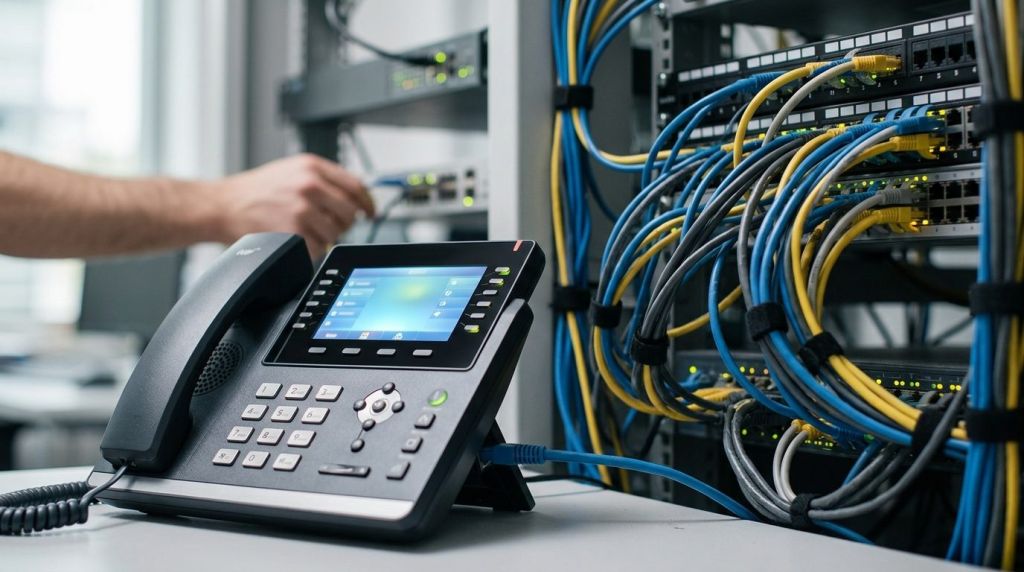
Architectural Readiness: Enterprise SIP Trunking Reliability and Latency
Voice traffic is uniquely sensitive to network disruptions. While standard web traffic accommodates packet loss through retransmission protocols, real-time voice packets cannot be delayed without causing audible clipping, echoing, or dropped calls. Therefore, modern contact center infrastructure requires stringent architectural planning.
When vetting potential partners, engineering teams must evaluate underlying network design parameters:
- Latency and Jitter Budgets: One-way network latency should remain below 150 milliseconds, with network jitter kept under 30 milliseconds to ensure clean conversational cadences across international queues.
- Carrier Redundancy: Enterprise SIP trunking reliability relies on active-active or automated secondary carrier failover. If a primary carrier experiences routing flaps, outbound and inbound sessions must re-route instantly without manual intervention.
- Session Border Controller Hardening: SBCs must sit at the network edge to police SIP traffic, normalize differing carrier headers, and protect telephony engines from denial-of-service floods.
- Local Gateway Continuity: For hybrid office facilities, local survivable branches guarantee that internal communication and emergency call functions continue uninterrupted if primary wide-area connections sever.
Core Platform Capabilities: Routing, Queuing, and CRM Integration
Enterprise contact operations live and die by their queue efficiency. A competent provider builds intelligent routing logic that eliminates customer bottlenecks while minimising administrative overhead. This involves pairing an omnichannel PBX architecture with resilient programmatic workflows.
Modern platforms like 3CX Business Communications and Yeastar allow organizations to route inbound interactions dynamically. Rather than trapping callers in static interactive voice response (IVR) loops, intelligent systems evaluate incoming caller identifiers, lookup existing records within your enterprise customer relationship management (CRM) database, and route interactions directly to assigned account managers or specialists.
To evaluate these workflows, technical teams should test several essential platform capabilities:
| Capability | Operational Requirement | Architecture Consideration |
|---|---|---|
| Skills-Based Routing | Distributes interactions based on agent proficiency and language. | Dynamic queue weighting engine linked to agent presence tags. |
| Two-Way CRM Webhooks | Pushes live call logs, recordings, and agent notes into customer profiles. | REST API integration supporting Salesforce, HubSpot, or custom databases. |
| Compliance Recording | Captures dual-channel audio with pause-and-resume controls. | Automated encryption with secure off-site archive storage policies. |
| Omnichannel Queuing | Unifies web live chat, messaging channels, and voice into one pane. | Synchronised session management engine to prevent agent channel overload. |
Security and Governance: Voice Encryption and Fraud Mitigation
Telephony infrastructure represents an attractive attack vector for malicious actors seeking toll fraud, customer data exfiltration, or denial-of-service extortion. Enterprise voice security must form an integral part of broader cybersecurity solutions rather than an afterthought.
First, all signaling and voice payloads must undergo mandatory cryptographic protection. Signaling should leverage Transport Layer Security (TLS), while media streams must use Secure Real-time Transport Protocol (SRTP). This prevents eavesdropping and packet inspection across public internet routes, aligning with standards defined by the Internet Engineering Task Force (IETF).
Second, providers must implement stringent SIP trunk toll fraud prevention. International call destinations should remain locked down by default, with automated rate-limiting triggers configured to suspend trunks if anomalous outbound spikes occur outside standard business operating hours. Role-based access controls (RBAC) must govern call recordings, ensuring administrative personnel cannot modify historical compliance audio.
Hardware vs. Softphone Provisioning: Engineering Agent Workstations
A resilient cloud contact center deployment must accommodate diverse agent work profiles, ranging from dense on-premise operational rooms to distributed home-office environments. IT teams must carefully choose the hardware or software approach best matched to their workforce needs.
Dedicated IP desk phones from manufacturers such as Yealink and Fanvil offer uncompromised voice fidelity and dedicated processing power. Because they run proprietary operating systems dedicated strictly to voice processing, desk phones are immune to general operating system crashes, local memory saturation, or background application interference. They are ideal for high-volume enterprise queues where physical buttons and hardware durability matter.
Conversely, softphone applications running on desktop or mobile environments provide vital operational agility for hybrid teams. However, softphones introduce endpoint variables such as operating system audio drivers, wireless packet drops, and computer CPU throttling. An experienced partner implements remote telemetry to track packet loss at the user device level, ensuring managers identify local Wi-Fi interference before it affects customer satisfaction.
Evaluating Service Level Agreements and Managed Voice Support
Service level agreements (SLAs) differentiate a transactional vendor from a strategic technology partner. When reviewing contract terms, scrutinise performance clauses closely to avoid vague commitments regarding general platform availability.
Demand clear contractual definitions surrounding these key metrics:
- Availability Beyond the Host: Standard 99.99% uptime guarantees must apply to end-to-end voice transport and SIP registration, not merely basic cloud virtual machine uptime.
- Mean Time to Resolution (MTTR): Ensure priority-one outages—such as widespread inbound queue failures—carry binding response and resolution windows backed by commercial penalty credits.
- Access to Senior Voice Engineers: Your team should bypass first-line script readers and connect directly with certified Tier-3 network and voice specialists during operational emergencies.
- Continuous Telemetry and Capacity Planning: A proactive provider monitors concurrent call volume thresholds, MOS audio quality scores, and packet transmission errors to identify capacity shortages before dropouts occur.
Organisations partner with Call Experts to navigate these technical complexities seamlessly. By engineering resilient communications infrastructure, managing redundant carrier trunks, and configuring tailored business workflows, Call Experts ensures your communication environment remains dependable, secure, and ready to scale.
Choosing the Right Partner for Long-Term Continuity
Selecting an enterprise voice platform is fundamentally an infrastructure decision rather than a simple software purchase. Prioritising underlying network architecture, carrier redundancy, and proactive governance protects your organisation against costly downtime and poor customer interactions.
Take the time to evaluate carrier routing paths, test CRM API handling under simulated load, and audit vendor support escalations. When you are ready to evaluate your enterprise communications architecture or upgrade your contact center infrastructure, reach out to the engineering team through our contact page to discuss your operational requirements.
Frequently asked questions
What is the primary difference between a VoIP reseller and a managed call center provider?
A reseller typically provisions basic software licenses without managing your network. A managed call center solution provider designs, monitors, and supports your entire voice architecture, including carrier failover, session border controllers, local quality of service, and CRM integrations.
Why is voice latency critical for cloud contact center environments?
Voice communication operates in real time. If network latency exceeds 150 milliseconds or jitter rises above 30 milliseconds, callers experience noticeable voice lag, cross-talk, and choppy audio, which directly harms customer experience and agent productivity.
Should call center agents use physical IP desk phones or softphones?
Physical IP phones provide dedicated hardware processing and superior stability for high-volume, on-premise call queues. Softphones offer excellent mobility and flexibility for hybrid teams but require well-managed endpoint computers and stable network connections to prevent audio issues.
What metrics must an enterprise voice service level agreement guarantee?
A comprehensive voice SLA must guarantee at least 99.99% end-to-end call delivery uptime, clear mean time to resolution (MTTR) windows for critical outages, proactive packet loss monitoring, and immediate access to certified Tier-3 telephony engineers.
Sources
- UBS picks BT to modernise global trader communications — IT Brief Australia, 2026-10-12
- How CallTower Builds One-Stop Cloud Communications For Global Teams — Telecom Reseller / Technology Reseller News, 2026-10-12


